How do you sum up the experience of 13.5 months of travel?
We certainly anticipate a lot of questions. What was your favorite country? What were the biggest highlights? What did you miss most about home? Each seems to have a simple answer (cheeseburgers for #3); but, in truth, it's impossibly complicated to construct an easy answer to questions that envelop such a diverse set of experiences.
When we look back at 13.5 months, spanning Central Mexico to the Southern tip of Argentina, we're filled with memories of happiness, surprise, frustrations, confusions, good days and bad days. This was not a vacation, it was our life for over one year.
Here we are, finally faced with the reality of going home, but we say goodbye to our current home which is the road. In the end it was - to sum as concisely as possible - one HELL of a Permacation.
Here's a short list of some of our experiences...
Permacation Factoids
We were off US Soil for 412 Days, 8 Hours, and 10 Minutes (if our cheapskate flight arrives on time).
We resided, at one point or another, on 2 continents; in 12 countries; in 96 cities, towns, villages, or municipalities; in 141 beds (that's 1 new bed every 2.92 days); in hotels, hostels, guest houses, tents, mountain refuges, buses, boats, bus stations, airports, and private residences.
We traveled by coach bus, minibus, microbus, minivan, chicken bus, pickup truck, taxi, train, private car, foot, airplane, flatbed truck, bicycle, rickshaw, bike taxi, colectivo, mototaxi (both 3- and 2-wheeled varieties), sailboat, ferry, motorboat, and horseback.
We met travelers from Europe, Asia, Australia, Africa, North America, and South America, and locals from every country we visited including, but certainly not limited to, Mexican market women, Guatemalan textile weavers, Belizian rasta-men, El Salvadorian guerilla fighters, Colombian sailboat captains, Peruvian subsistence farmers, Argentinian musicians, Bolivian jungle-sound-imitators, and Panamanian indigenous islanders.
We experienced the following illnesses and afflictions, in no particular order: 6 cases of food poisioning or traveler's... ahem, diarrhea; 1 severe allergic reaction of unknown origins; several cases of heat rash, sunburns, and various heat related afflictions; 1 case of guinea pig-induced indigestion; bites from mosquitos, bed bugs, sand flies, horse flies, black flies, fire ants, spiders, and other unknown insects; 2 head colds; unknown quantities of blisters; permanent scarring from open sores exposed to sulfuric hot springs; all sorts of scrapes and scratches; and countless hangovers.
We survived tropical storms, volcanic eruptions, mudslides, landslides, rockslides, earthquakes, pickpockets, stray dogs, hail storms, bus and taxi drivers, and angry groups of Canadian hockey fans.
We ate crickets, grasshoppers, and termites; cow brains, beef hearts, and huge gourmet steaks; ceviche, fresh trout, red snapper, octopus, and lobster; guinea pig, rabbit, alpaca, and blood sausages and chorizos; churros, empanadas, arroz con leche, dulce de leche, sweet potato donuts, deep-fried bananas stuffed with black beans, and decadent cakes; cactus; new fruits and vegetables; salchipapas; quail eggs; high-end gourmet and street-deep-fried you-name-it.
We drank Mexican tequila and mezcal, Belizian rum, Guatemalan atol, Colombian aguardiente, Ecuadorian leche de tigre, Argentine wine, Bolivian fruit smoothies, Nicaraguan chicha, Peruvian pisco, horrible beer from every country, and unmentionable varieties of instant coffee.
We saw and experienced dry, cracked deserts, ancient ruins, enormous snowcapped mountains, crystal blue Caribbean waters, white sand beaches, tropical islands, rolling hills, active glaciers, Vegas-style lazer light shows synchronized to water fountains, coffee farms, live local music, banana farms, Amazon jungle, rushing rivers, spectacular cliffs, waterfalls, hot springs, Atlantic and Pacific oceans, cosmopolitan cities, tiny indigenous villages, quaint colonial towns, volcanos and crater lakes, highland mountain passes, and cloud forests.
We also wined, dined, hiked, biked, dove, rock climbed, climbed a mountain, rode horses, go-carted, shopped at traditional markets of all varieties, lied on beaches and in countless hammocks, surfed, white water rafted, snorkeled, sailed, ziplined, sandboarded, bet on horses, went to soccer (FUTBOL) matches, caved, took cooking classes, fished, paddleboated, kayaked, canoed, learned to weave, spoke English (American, Australian, Candian, and British varieties), Spanish, Q'uiche, Quechua, Swedish, French, and German.
As sad as it is to leave all this behind, we can't wait to see our friends and family!
See you soon everybody!
Showing posts with label Life on the Road. Show all posts
Showing posts with label Life on the Road. Show all posts


Fun Update
Thursday, April 7, 2011
Rich is officially a published (and modestly paid!) travel-writer! Check out his article published on the popular travel website BootsnAll! A couple of the photos featured are Kendra´s as well.
It´s featured right now on the main page at www.bootsnall.com.
You can also copy and paste the following to go directly to the article:
http://www.bootsnall.com/articles/11-04/traditional-markets-in-latin-america-a-guide-for-first-time-shoppers.html
Enjoy!
It´s featured right now on the main page at www.bootsnall.com.
You can also copy and paste the following to go directly to the article:
http://www.bootsnall.com/articles/11-04/traditional-markets-in-latin-america-a-guide-for-first-time-shoppers.html
Enjoy!
Life on the Road Part III: Adapting to Local Customs
Monday, March 14, 2011
One of the biggest reasons we love to travel is to soak up the local culture. Every day we hear different music, see people wearing different clothes, we speak another language. Traveling to one country is entertaining enough, but to cover 12 in a span 14 months involves a lot of adaptation.
 Adapting to local customs is one of the more challenging, often hilarious, and most important things we've had to do over the last 350-plus days. The formerly simple is now confusing and bewildering in many circumstances, and the formerly mundane now provides a challenge or at the very least a good story or two.
Let's start with the most obvious. We don't speak Spanish. Sure, we've worked hard to learn our fair share over the last 12 months, we can buy a bus ticket, order food, and (on a good day) have a simple, slow conversation. But to really learn the ins and outs and to speak fluently takes years of constant immersion that we just don't have. The language barrier is both entertaining and frustrating. It's entertaining when Rich realizes he called a woman “fat” instead of “pretty” or when Kendra asks to “touch” a picture of someone instead of “take” one. It's frustrating when we don't understand why we're being charged twice as much as the locals for the same taxi and the explanation appears complicated. It's both frustrating and entertaining when we ask if the bread we're buying is cheese-filled, we're told yes and expect deliciousness to ensue, and the “cheese” turns out to be of the “Whiz” variety...
Latin America has it's similarities but every country is different. This includes the language, where the dialect and accent changes from region to region and country to country. Other basic customs change as well. We've had to relearn how to buy a bus ticket everywhere we've gone. In Mexico, you go to the office and the nice man in the nice suit prints one off a computer for you at a set price. In Colombia, you negotiate with psychotic competitors who will knock pennies off their enemy's price especially for you. In Guatemala, walk to the parking lot full of buses and get on the one whose engine is running. Pay later, if asked.
While from country to country and town to town we're constantly relearning how to shop, how to tip, how to say “good afternoon,” how to bargain, we've also had to deal with certain things as constants throughout most – we try to never say “all” - of Latin America.
 Certain ways-of-doing are just flat out different. Crossing the street can be an adventure. Ever notice at home how those cars stop for you at intersections, crosswalks... hell, stop signs and red lights? Not here. Stay the hell out of the way because the cars ain't stoppin'. They'll honk at you to let you know they're about to run you down, but covering the brake is completely out of the question. Used to politely waiting your turn at the grocery store? Better not. Don't expect attention here without speaking up, and don't be surprised when locals step right in front of you with the full knowledge that you were there first. Sure, it's frustrating for us but here it's normal and it's not meant to be rude, it just is and if you stand idly by you won't get your mangos from the market stand anytime soon.
There are a number of cultural differences that when you look at them are fun, mostly in retrospect. In many parts of Latin America, you may sit on the bus uncomfortably close to, on top of, or underneath various individuals, for personal space possesses a very different state of being here. While we're on the subject of the bus, can we turn the music down please? Latin American's love their music and they love it loud, anywhere, everywhere. Wanna play “Spot the Gringo?” Look for the shorts and sandals, bikinis and tight pants, all rarely worn by Latinos even in the sweltering tropics.
There are also some situations where culture inevitably dictates some discomforts and inconveniences for us. There is generally less organization than we're used to, particularly in places like grocery stores, bus stations, post offices. We have to fight to have our voices heard. Another frustrating one is the tourist-local separation that often occurs: foreign tourists pay higher prices for many things. Sometimes this is standard, like at National Parks where the fees are fixed, and sometimes we can be flat out scammed, like on buses and in taxis or when we get haircuts. Usually we're not bothered to pay a higher price, we are after all far more economically well off than most locals we encounter, but we don't like being taken advantage of.
 The local-tourist divide frustrates us in other ways sometimes as well, like the other night at a sporting event where the tourists sat in one section and the locals in another: we really wanted to sit with the locals to experience the event the way they do. There are also many restaurants and bars that cater so much to tourists that you'll rarely if ever see a local when you go there. Sometimes we head to these places for comfort food, other times we're frustrated when we want to experience local culture and find ourselves in a cafe full of Europeans and North Americans.
Sometimes we're forced to adapt to things beyond culture that are a part of traveling in less developed countries: Pollution being coughed up by traffic sometimes burns our eyes, it confounds us as to why the post office would notify us of a package that doesn't exist, and trash being thrown on the side of the road makes us wince.
But it's the culture that is the essential part of our experience, and we have a lot of fun learning all the little differences over and over again. We also just love to take in local music, art, food, and to sit out in a park or on the street and soak in the atmosphere which is always so different than home. After a year, we've become used to the constant change but we're always astounded by the little things that present themselves, and we're always forced to relearn our ways of being and doing things. Always good times!
Life on the Road Part 2: The Budget
Saturday, January 29, 2011
Bunches of new pictures up, and here's a nice looooong post especially for the Math Nerds in our families.
 While on our journey we have met a lot of new people who inevitably realize that we are traveling for an extended period of time, and in turn we have encountered a good mix of reactions. Some people recall the time they went on a year long trip; others will joke about how jealous they are. However, one reaction which we have experienced regularly is “You must be rich!” or the even better cousin reaction of “ Your parents must be rich!” We count ourselves very fortunate to be able to able to travel this way; however, we have never really considered ourselves, or our families, RICH. We thought this would be a good time to lift the veil as to how we are still out here after 10 months and, as our parents can testify, have not visited Western Union once.
Before anything else is said, this trip has forced us to acknowledge how lucky we really are. Seeing the poverty of some of these countries has put our lives into perspective. We are rich, not only with our bank accounts, but the fact that we were able to attend higher education and have had good employment history. That said, you don't need to be Donald Trump or anywhere close to travel long term. The biggest factor in traveling long-term is to recognize that it's not a vacation. We had to adjust our expectations from what most Americans consider vacation to be. We're not here splurging on all-inclusive packages or drinking expensive poolside cocktails (though we have our moments), we're here to live a traveling lifestyle that affords us a great deal of freedom, but one that is not unlimited, and that is very different than a typical week at Disney World.
Pre-trip Planning and Saving
 Our financial planning for this trip began years ago when we came up with our first budget. Choosing the destination was the first major step. There are travel sites on the web that give good price estimates for visiting various countries. For example, you might see a range for Guatemala of $20-40 per day. Your actual expenses will depend on whether you stay at the cheapest place in town, cook every meal for yourself, and never do organized activities; or if you stay at a slightly nicer place, go out to eat occasionally, and take a few tours. We quickly realized that we would not been able to afford certain regions or countries this time around. You can get a night's accommodation in Nicaragua for the cost of one beer in England. We had to put many of our travel fantasizes on hold...bye bye Italy. We then took the estimates for parts of Central and South America, factored in our tastes/desires, and multiplied by the number of days that we wanted to travel for, and we had our first budget. However, we soon realized that we needed money to buy gear for the trip, for flights, for travel health insurance, for replacement gear, for gifts, for unforeseen expenditures (and how there has been a lot of those), and to come back and live on for a while. All said and done our budged tripled.
It took us a few years and a lot of hard work to be able to save up enough for us to feel comfortable. To meet our goals we not only had to change our perception of “vacation,” but we also changed our lifestyle at home as well. We chose to do without many of the things our friends and coworkers were doing. We cooked cheaply at home for most meals, brought our lunch to work, we became frequenters of thrift stores, we didn't buy a new car, and most importantly we decided not to buy property and instead rented an inexpensive apartment way below our income level. We did make a commitment to enjoy our time in Chicago and went out with friends or occasionally for dinner and a movie. This may have possibly delayed our departure a few months but it was completely worth it.
Keeping Track of It All
As soon as we started actively saving for our trip, we decided to keep matriculate details of our expenditures. Once we left, we continued with this habit. This has turned out to be one of the most valuable tools to keep us on track financially. Before we left we had a target Cost-Per-Day average that we hoped to reach by the end of the trip. We also had a range for that target number that we felt comfortable with, including an idea of what we could possibly do if we came back with a bare bones return fund.
 While traveling we keep track of every credit card charge or ATM withdrawal and add it into our spreadsheets. We calculate how much we are spending per day for each month as well as our overall trip daily average. Now that we are far into our trip we've been calculating more detailed target averages for different return scenarios. Sounds exciting eh? We told you not everything we do out here is for fun.
When you are planning to spend $X per day over the course of the entire trip, you learn that this is a large average. One day you will be way over and the next way under. Forget about days, some months we are way over and some months we are under. We have also learned that large excursions only add pocket change to our daily average over the long haul, and that small expenditures can really add up! A fact that's become very important to our daily lives on the road.
When to Spend and When to Save
If you are taking a 2 week vacation, you want to enjoy yourself with as much as possible. Go to a nice resort, eat out, stay at nice hotels. However, when you are traveling long term on a tighter budget, the number one factor that can make or break your budget is the type of lifestyle you lead. We won't lie, it has been hard trying to figure our what works for us. When we started out on this trip we watched every single dollar. We tried to stay in the cheapest places, cook cheap meals, and walk everywhere. We have come to learn enough to be a bit more flexible and have personally found that we don't really want to do things as cheap as possible. We will pay an extra dollar to stay at a slightly better hostel or we will pay a few bucks to take a cab from the bus station if it is a mile walk. At the same time, we still have managed to live very cheaply by making smart sacrifices that fit what our travel goals are. Here are the details of many of the things that we do to keep the costs down, keep us out on the road longer, and make the trip a Permacation instead of a Vacation.
 1. Cooking. Depending on the country we are in and what is available, we have consistently only spent between $1-$3 per person per meal on the entire trip by cooking our own meals instead of eating out at restaurants. In some countries we have found this to be more helpful than others. In Guatemala you can get a good dinner for only $4, while in Argentina you will be paying $12. Thus, in some countries we have gone out to eat more than others. We also take advantage of cheap deals when we can, like splitting obscenely cheap, very hearty set lunches offered in many Latin American countries.
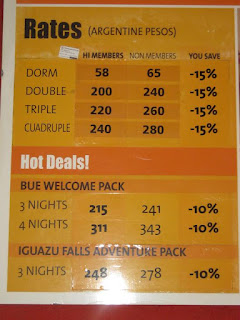
2. Housing. Hostels have cost us between $4 and $20 per person per night depending on the quality and location. As mentioned before, we tend not to stay in the cheapest place, but we are still very conscious of the choices we make. In some areas we can share a private room for the same cost of two dorm room beds; however, in other countries, a private room might cost us both double that of a dorm room. Even in those cases; however, we will usually pay the extra $1 per night to stay in a dorm room with 4 beds instead of one with 10 beds.
3. Tours/Activities. One of the largest considerations for doing activities while on a trip of this length is what areas you will be traveling in the future. We purposefully put off white water rafting until we got to Honduras where it is known to be cheaper. We absolutely loved it and want to go again, but we are bypassing the activity in Argentina and waiting again until Peru when it will be a fraction of the cost. We have also chosen to go without some activities that were simply out of our price range (who really NEEDS to go skydiving). Most importantly, we have taken the time to research the cost of the activities we have chosen to do. Sometimes you can get a discount going with your hostel group, other times the price is almost double just to have them drive you there and buy your entrance ticket. Sometimes we get guides, sometimes we go it on our own. Regardless, we try to eventually experience all the activities we have been looking forward to, we just have to wait until the right time, place, and method.
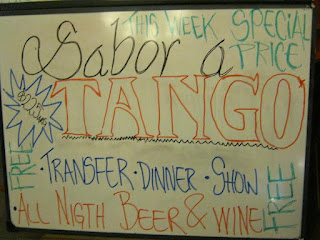 4. Transport. This one is tricky because we have to get from point A to point B and sometimes we don't have much of a choice for the cost unless we want to hitchhike. There have been some countries were transport will make a difference. In Guatemala you can choose to take an expensive shared private shuttle ($10-$20) or take a public chicken bus with several transfers, longer travel times, and possible tight space ($1-$5). In Colombia we found that the long distance bus fares are negotiable. We would get a dollar or two off every ride and it would really add up. In Argentina, the bus costs are a large chunk of our budget. To minimize the effects we take the cheapest bus available, which generally means that our seats do not recline back as far as in the more expensive options and we are served basic meals, but then again we are not sitting next to livestock so we can't complain.
5. Simple Living. This is general but true. We keep shopping to a minimum: if it isn't in chocolate form, we don't have room for it. We constantly fix our clothes and supplies until they are falling apart and we are forced to replace. Most importantly, we tend to have low key evenings at the hostel hanging out with others instead of spending every night out at the clubs.
There are other ways to save a bundle if they fit your taste: camp instead of hostel, work or volunteer along the way, couchsurf, hitchhike or rideshare (safer in these countries than you think), or travel to fewer locations and stay in each for longer periods of time. We've met bunches of travelers who use one or more of these methods to save cash and stay on the road as long as possible... some people have been out for years (don't worry Mom, we're still coming home in May!).
Hope this helps clear things up. No, we did not win the lottery. No, we did not invest in Apple when we were 4 years old. And yes, it is possible for many of you to hit the road if you want to.
 While on our journey we have met a lot of new people who inevitably realize that we are traveling for an extended period of time, and in turn we have encountered a good mix of reactions. Some people recall the time they went on a year long trip; others will joke about how jealous they are. However, one reaction which we have experienced regularly is “You must be rich!” or the even better cousin reaction of “ Your parents must be rich!” We count ourselves very fortunate to be able to able to travel this way; however, we have never really considered ourselves, or our families, RICH. We thought this would be a good time to lift the veil as to how we are still out here after 10 months and, as our parents can testify, have not visited Western Union once.
Before anything else is said, this trip has forced us to acknowledge how lucky we really are. Seeing the poverty of some of these countries has put our lives into perspective. We are rich, not only with our bank accounts, but the fact that we were able to attend higher education and have had good employment history. That said, you don't need to be Donald Trump or anywhere close to travel long term. The biggest factor in traveling long-term is to recognize that it's not a vacation. We had to adjust our expectations from what most Americans consider vacation to be. We're not here splurging on all-inclusive packages or drinking expensive poolside cocktails (though we have our moments), we're here to live a traveling lifestyle that affords us a great deal of freedom, but one that is not unlimited, and that is very different than a typical week at Disney World.
Pre-trip Planning and Saving
 Our financial planning for this trip began years ago when we came up with our first budget. Choosing the destination was the first major step. There are travel sites on the web that give good price estimates for visiting various countries. For example, you might see a range for Guatemala of $20-40 per day. Your actual expenses will depend on whether you stay at the cheapest place in town, cook every meal for yourself, and never do organized activities; or if you stay at a slightly nicer place, go out to eat occasionally, and take a few tours. We quickly realized that we would not been able to afford certain regions or countries this time around. You can get a night's accommodation in Nicaragua for the cost of one beer in England. We had to put many of our travel fantasizes on hold...bye bye Italy. We then took the estimates for parts of Central and South America, factored in our tastes/desires, and multiplied by the number of days that we wanted to travel for, and we had our first budget. However, we soon realized that we needed money to buy gear for the trip, for flights, for travel health insurance, for replacement gear, for gifts, for unforeseen expenditures (and how there has been a lot of those), and to come back and live on for a while. All said and done our budged tripled.
It took us a few years and a lot of hard work to be able to save up enough for us to feel comfortable. To meet our goals we not only had to change our perception of “vacation,” but we also changed our lifestyle at home as well. We chose to do without many of the things our friends and coworkers were doing. We cooked cheaply at home for most meals, brought our lunch to work, we became frequenters of thrift stores, we didn't buy a new car, and most importantly we decided not to buy property and instead rented an inexpensive apartment way below our income level. We did make a commitment to enjoy our time in Chicago and went out with friends or occasionally for dinner and a movie. This may have possibly delayed our departure a few months but it was completely worth it.
Keeping Track of It All
As soon as we started actively saving for our trip, we decided to keep matriculate details of our expenditures. Once we left, we continued with this habit. This has turned out to be one of the most valuable tools to keep us on track financially. Before we left we had a target Cost-Per-Day average that we hoped to reach by the end of the trip. We also had a range for that target number that we felt comfortable with, including an idea of what we could possibly do if we came back with a bare bones return fund.
 While traveling we keep track of every credit card charge or ATM withdrawal and add it into our spreadsheets. We calculate how much we are spending per day for each month as well as our overall trip daily average. Now that we are far into our trip we've been calculating more detailed target averages for different return scenarios. Sounds exciting eh? We told you not everything we do out here is for fun.
When you are planning to spend $X per day over the course of the entire trip, you learn that this is a large average. One day you will be way over and the next way under. Forget about days, some months we are way over and some months we are under. We have also learned that large excursions only add pocket change to our daily average over the long haul, and that small expenditures can really add up! A fact that's become very important to our daily lives on the road.
When to Spend and When to Save
If you are taking a 2 week vacation, you want to enjoy yourself with as much as possible. Go to a nice resort, eat out, stay at nice hotels. However, when you are traveling long term on a tighter budget, the number one factor that can make or break your budget is the type of lifestyle you lead. We won't lie, it has been hard trying to figure our what works for us. When we started out on this trip we watched every single dollar. We tried to stay in the cheapest places, cook cheap meals, and walk everywhere. We have come to learn enough to be a bit more flexible and have personally found that we don't really want to do things as cheap as possible. We will pay an extra dollar to stay at a slightly better hostel or we will pay a few bucks to take a cab from the bus station if it is a mile walk. At the same time, we still have managed to live very cheaply by making smart sacrifices that fit what our travel goals are. Here are the details of many of the things that we do to keep the costs down, keep us out on the road longer, and make the trip a Permacation instead of a Vacation.
 1. Cooking. Depending on the country we are in and what is available, we have consistently only spent between $1-$3 per person per meal on the entire trip by cooking our own meals instead of eating out at restaurants. In some countries we have found this to be more helpful than others. In Guatemala you can get a good dinner for only $4, while in Argentina you will be paying $12. Thus, in some countries we have gone out to eat more than others. We also take advantage of cheap deals when we can, like splitting obscenely cheap, very hearty set lunches offered in many Latin American countries.
2. Housing. Hostels have cost us between $4 and $20 per person per night depending on the quality and location. As mentioned before, we tend not to stay in the cheapest place, but we are still very conscious of the choices we make. In some areas we can share a private room for the same cost of two dorm room beds; however, in other countries, a private room might cost us both double that of a dorm room. Even in those cases; however, we will usually pay the extra $1 per night to stay in a dorm room with 4 beds instead of one with 10 beds.
3. Tours/Activities. One of the largest considerations for doing activities while on a trip of this length is what areas you will be traveling in the future. We purposefully put off white water rafting until we got to Honduras where it is known to be cheaper. We absolutely loved it and want to go again, but we are bypassing the activity in Argentina and waiting again until Peru when it will be a fraction of the cost. We have also chosen to go without some activities that were simply out of our price range (who really NEEDS to go skydiving). Most importantly, we have taken the time to research the cost of the activities we have chosen to do. Sometimes you can get a discount going with your hostel group, other times the price is almost double just to have them drive you there and buy your entrance ticket. Sometimes we get guides, sometimes we go it on our own. Regardless, we try to eventually experience all the activities we have been looking forward to, we just have to wait until the right time, place, and method.
 4. Transport. This one is tricky because we have to get from point A to point B and sometimes we don't have much of a choice for the cost unless we want to hitchhike. There have been some countries were transport will make a difference. In Guatemala you can choose to take an expensive shared private shuttle ($10-$20) or take a public chicken bus with several transfers, longer travel times, and possible tight space ($1-$5). In Colombia we found that the long distance bus fares are negotiable. We would get a dollar or two off every ride and it would really add up. In Argentina, the bus costs are a large chunk of our budget. To minimize the effects we take the cheapest bus available, which generally means that our seats do not recline back as far as in the more expensive options and we are served basic meals, but then again we are not sitting next to livestock so we can't complain.
5. Simple Living. This is general but true. We keep shopping to a minimum: if it isn't in chocolate form, we don't have room for it. We constantly fix our clothes and supplies until they are falling apart and we are forced to replace. Most importantly, we tend to have low key evenings at the hostel hanging out with others instead of spending every night out at the clubs.
There are other ways to save a bundle if they fit your taste: camp instead of hostel, work or volunteer along the way, couchsurf, hitchhike or rideshare (safer in these countries than you think), or travel to fewer locations and stay in each for longer periods of time. We've met bunches of travelers who use one or more of these methods to save cash and stay on the road as long as possible... some people have been out for years (don't worry Mom, we're still coming home in May!).
Hope this helps clear things up. No, we did not win the lottery. No, we did not invest in Apple when we were 4 years old. And yes, it is possible for many of you to hit the road if you want to.
Life on the Road Part I: Living in Hostels
Tuesday, January 18, 2011 When you read our blog or look at our pictures, it seems like all we do is sight-see. It looks like we never cease having fun and every moment is perpetual neverending vacation-induced bliss. The truth is that we love our life on the road and we've obviously had and continue to have incredible experiences, but when you travel for so long there's a "real life" aspect that is largely behind the scenes of our blog, our pictures, and our emails to friends and family. After almost 10 months our life has become a routine that's quite different from our life back home, but it's still a routine.
We decided it would be fun and interesting to show you some of the less glamorous, though sometimes equally entertaining aspects of the way we live our life out here as long-term travelers over a couple of posts. We'll start with the issue of meeting our most basic need that we confront each day: where to sleep.
What's a Hostel?
The majority of the time we sleep in hostels. Hostels are not fancy hotels; they are designed with budget-travel in mind. They typically stand apart from hotels in that the vast majority of spaces are shared; many rooms are dormitory style with between 4 and 12 beds (bathrooms are usually communal as well), they have common living areas often with TV rooms, game tables, or bars, and most good ones will have a communal kitchen where guests can prepare their own food. They're a far cry from Caesar's Palace or even the Super 8. We spend most of our nights in hostels, although we have on occasion stayed at slightly nicer "hospedajes" (really cheap hotels) when we have traveled in very inexpensive countries.
The Good
 While traveling in hostels is not for everyone, they possess an incredible number of advantages over typical hotels. The first and most obvious is the price. A dorm-bed on our trip has ranged from $4US - $17US per person, per night. Often for only a dollar or two more we splurge for a private room with a shared bathroom. Even a Motel 6 in the USA costs at least $40, and many vacationers easily spend hundreds of dollars a night just on their hotel. Some long-term travelers choose to camp a lot, but for those who like a warm bed with a mattress hostels are a great option.
In addition, common areas like living rooms, TV and game areas offer the opportunity to meet other travelers and make friends, essential when on the road for months at a time. If you are lucky, your hostel may have perks like hammocks, pools, gardens, or even pets. Many hostels have book exchanges where you can trade books you've finished for new ones (Kendra goes through about 4 books an hour, Rich is on his 4th book of the trip). Communal kitchens allow you to cook your own meals which not only saves you an incredible amount of money, but allows you to eat healthy. Traveler's leave leftovers in “free” baskets for others to use and we carry quite a bit of food with us from place to place. We eat the vast majority of our meals at our hostels, not out as we would on a typical vacation, and we have come to realize that a well-equipped kitchen is one of our major pre-requisites when choosing a hostel.
Finally, given that hostels are geared towards independent-minded travelers, they usually offer tons of valuable information. They provide info and directions for activities in their area, can help you book tours and onwards bus tickets and many will direct you to other good hostels in nearby popular cities and towns.
The Bad and The Ugly
 While hostels have their pro's there are definitely bad and downright ugly characteristics as well. Cleanliness can be a major issue when you share space with dozens of strangers. We've seen some spotless hostels but also others that should be condemned even if they were situated in the furthest circles of Hell. A good example was our hostel in Tulum, Mexico that didn't have running water, toilet paper, or employees who cared to fix the problem. The hostel made up for these deficiencies, however, with a plethora of broken bikes and cockroaches.
After months on the road it's often tiring to not have your own personal space. Sharing bedrooms and a kitchen gets old after a while and isn't fun when you're frankly just not in the mood for it. Sometimes you just want your own couch, your own bed, and your own pots and pans. We counter this by getting private rooms when we can, mostly so we can throw our stuff everywhere, but in some places (like here in Patagonia), it's simply not affordable for us.
The social scenes at hostels are usually an advantage and we've met lots of good friends, but you also have to share space with people that just flat out annoy you. Some people bug you with their political views or their views about how every other traveler should "eat at 'XXX' restaurant" or "not miss 'YYY' town." The unsolicited advice gets old after a while, as does the same old "where ya from, where ya goin, how long ya been traveling" conversation. You also have the adults who haven't seemed to grow up enough to do their dishes or pick up their dirty laundry.
Other common problems we have in hostels are indifferent to flat out rude staff members, ill-equipped or dirty kitchens, false advertising and incorrect info. Fun times!
Even at the best hostels, we still face a host of small challenges that you would never think about at home. For example, when you are sharing a 10 bed dorm and 3 people are trying to catch a 4am bus, you are probably going to be woken up no matter how quietly they pull their toothbrushes out of their ziplocs. Or how you have to bag and label all your food in the hostel refrigerator; when you are in a busy hostel you have to play “find my white plastic bag” amongst 20 other white plastic bags to be able to eat your food – and sometimes it's simply disappeared.
How We Find and Pick Hostels
 So how do you go about finding and picking a hostel? There are tons of websites that are literally hostel search engines, just like Orbitz or Expedia are for hotels. They contain reviews, pictures, and you can make reservations. We also frequent online message boards for independent travelers, but by far the most useful tactic is simply to talk to other travelers at your hostel who have been to where you're going.
We almost never book a hostel in advance. We find that pictures and reviews can be deceiving, so whenever possible we just show up in a city with a few in mind and take a look around. Here's our list of important criteria we always look for when finding a hostel:
- Clean!
- A well-equipped kitchen
- Good sociable atmosphere
- Internet access
- Friendly staff and good information
Our next "Life on the Road" post will focus on how we afford this craziness. Look for it in the next few weeks. Later kids!
Subscribe to:
Posts (Atom)
