The Santuario de Las Lajas was built in the Gothic style after Mary reportedly appeared in the stone on the side of the cliff. In honor of the appearance, they constructed the alter around the actual rock, painting the scene on the rock itself. While the inside of the church impresses you with light that comes through the stain-glass window and reflects off the gold decor, it is the location of the church that is absolutely breathtaking. We arrived as the last service was ending and stayed as the sun set and the church glowed in the valley. We definitely understand how this location has become something of a pilgrimage for some Colombians and other South Americans.
Showing posts with label Colombia. Show all posts
(The Spectacular) Santuario de Las Lajas
Sunday, October 17, 2010The Santuario de Las Lajas was built in the Gothic style after Mary reportedly appeared in the stone on the side of the cliff. In honor of the appearance, they constructed the alter around the actual rock, painting the scene on the rock itself. While the inside of the church impresses you with light that comes through the stain-glass window and reflects off the gold decor, it is the location of the church that is absolutely breathtaking. We arrived as the last service was ending and stayed as the sun set and the church glowed in the valley. We definitely understand how this location has become something of a pilgrimage for some Colombians and other South Americans.
Southern Colombia
Monday, October 11, 2010
First off, we've updated a lot of pictures, if you want to see them all, they include the Popayan, San Agustin, and Tatacoa Desert folders.
We're nearing the end of our tenure in Colombia. We've spent a good chunk of time lately in Popayan, a colonial town and a good hub for exploring Southwestern Colombia. There are a few fascinating natural and archaeological sites in the southwest, and we used Popayan as a convenient, pizza-selling, grocery-store-having, internet-accessible home-base for checking out the area.
Our first stop was a three day stay in San Agustin. Surrounded by incredible natural beauty, the most famous part of the area are the old statues that are scattered about the countryside. The statues range in size, but generally mark old tombs and are nearly 3000 years old. The culture that the tombs and statues belong to are a bit mysterious And not much about it are known, but the sites are beautiful and the tombs and statues are fascinating. Additionally, we took an outstanding Jeep tour through the countryside, seeing some of the more remote statue sites as well as two giant waterfalls and beautiful rock formations on the Rio Magdalena. We rode on top of the Jeep to enjoy the outstanding views and to work on our bumpy-road-ass endurance.

Our other stop was an awesome visit to the beautiful (and quirky) Tatacoa Desert. The desert is an environmental oddity, surrounded by the rest of hilly Colombia, but they get only two days of rain per year, and the area looks like a proper, if small, desert. A little slice of Arizona in Colombia.
We walked from the nearest town two hours down a long lonely desert highway as the sunset to arrive at our isolated cabana. We visited an observatory where we saw Jupiter and it's moons through telescopes, and we woke the next morning before sunrise to watch the colors emerge over the orange cracked Earth and cacti. We took a walk around the "Labyrinth," a group of orange sand formations, with a cute kitten in tow, and enjoyed the morning light and cool weather. One of the the best parts was the nearly complete isolation. We spend a lot of time in "touristy" areas, and sitting on the rocks listening to nothing but the wind in the desert was a welcome respite.
After the desert, with our final stop on the southwest tour out of commission with rumors of Colombian rebel activity (good times!), we took an amazingly awful 12 hour bus ride back to Popayan that included a completely-inexcusable 30 minute rest break just 30 minutes before getting into town. But we've recovered by sleeping late, watching movies, and fattening up on Popayan-ese pizza before we head soon to Ecuador.
One more stop to visit a giant cathedral sitting over a gorge near the border, then onward once again!
We're nearing the end of our tenure in Colombia. We've spent a good chunk of time lately in Popayan, a colonial town and a good hub for exploring Southwestern Colombia. There are a few fascinating natural and archaeological sites in the southwest, and we used Popayan as a convenient, pizza-selling, grocery-store-having, internet-accessible home-base for checking out the area.
Our other stop was an awesome visit to the beautiful (and quirky) Tatacoa Desert. The desert is an environmental oddity, surrounded by the rest of hilly Colombia, but they get only two days of rain per year, and the area looks like a proper, if small, desert. A little slice of Arizona in Colombia.
We walked from the nearest town two hours down a long lonely desert highway as the sunset to arrive at our isolated cabana. We visited an observatory where we saw Jupiter and it's moons through telescopes, and we woke the next morning before sunrise to watch the colors emerge over the orange cracked Earth and cacti. We took a walk around the "Labyrinth," a group of orange sand formations, with a cute kitten in tow, and enjoyed the morning light and cool weather. One of the the best parts was the nearly complete isolation. We spend a lot of time in "touristy" areas, and sitting on the rocks listening to nothing but the wind in the desert was a welcome respite.
One more stop to visit a giant cathedral sitting over a gorge near the border, then onward once again!
Salento and the Six Month Mark
Monday, September 27, 2010We also hit a significant milestone while in Salento, we have been gone officially more than six months. At this point, we thought it would be fun to revise our list of "Tops" from after our first month. Enjoy!
Top 3 Places (this one is really hard and provides no justice!)
- San Blas Islands
- San Pedro La Laguna, Guatemala
- Xela, Guatemala
Top 3 Activities so far...
- Hiking in the Sierra Norte, Mexico
- Rafting outside of La Ceiba, Honduras
- SCUBA Diving, Utila, Honduras
Top 3 Food Items/Meals!
- Belize BBQ Chicken from the street stands
- Fresh fish, lobster, octopus in San Blas
- Pan Dulce (sweet breads of all varieties, sold all over Latin America)
- Fresh fruit, particularly the incredible pineapple and mango (okay so we added a 4th, we love to eat)
Top 3 Fun Questions About Central America
- Why are beverages sold in bags?
- Why does every destination in the country necessitate a separate bus station within each city?
- Why does nobody have change for anything? Ever?
Top 3 Things We Miss From Home
- A proper burger
- Clean clothes
- Our own bed
Top 3 Things We´re Looking Forward To
- Tekking in the Andes
- Kendra's weaving classes and more spanish for Rich
- Patagonia (or bust!)
Holler kids.
Como Almorzar Como un Colombiano (How to Eat Lunch Like a Colombian)
Tuesday, September 21, 2010
Menu Ejecutivo, Menu Del Dia, Almuerzo, Comida Corriente... call it what you want, it's the "Set Lunch" and it's nearly everywhere in Latin America. Want to eat lunch like a Colombian? Here is, by far, the most popular way to do it.
Oh, and by the way, it'll set you back a whopping US$2.77.
The Rules
1. Be ludicrously hungry and short on cash.
2. Walk down almost any typical street and you'll see restaurants advertising "Comidas Corrientes." Find a crowded restaurant. When you find a crowded place, it's more likely the food is good and safe.
3. The menu is displayed outside, and the server will review it for you if you need, but you're expected to order the first time your server comes to the table. Know what you want when you sit down... that, or explain in Spanish that you need a few minutes to fully translate the menu for your linguistically-challenged significant other.
4. Take a long time to eat... noone wants to be heading back to work anytime soon. Two hours is sufficient. Pay at the front on your way out the door long after your stomache has settled.
The Food
The classic Almuerzos from Guatemala to Colombia are Carne Asada and Pollo a la Plancha (grilled steak and chicken respectively), you'll find those choices on every Menu del Dia you'll ever see.
Beyond that, it gets regional: local soups or fish, wild versions of fried chicken, pork or beef concoctions. All sorts of different things make the menu, but typically you'll have 3-5 choices: chicken, beef, fish, soup, and some sort of intestine if you're lucky.
The Experience
1. You're going to get soup. And not just a wimpy cup of broth, a ludicrously giant bowl of proper soup. Just in case the appetizer wasn't already too big, you're also going to get something with your soup. In Colombia it's an Arepa, a soft patty made of corn. Everywhere north of Panama, it's tortillas and more tortillas, surprises await as we head further south.
The soup itself varies, but might be a brothy chicken mix, cream of celery, or cream of frijoles (beans). Today, it's Sancocho, a specialty in Colombia that is a flavorful broth poured over steamed Yuca root:

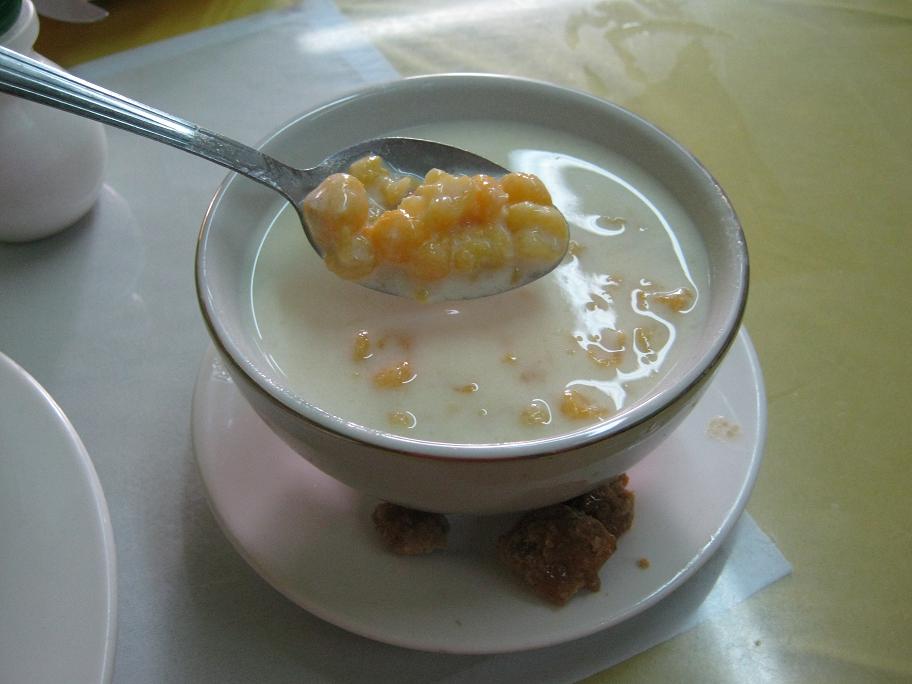
2. Refresco anyone? Your $2 includes your drink. There is a huge range of drinks offered and they change in every region. You may get water infused with Canela (unrefined sugarcane) in Colombia, Atol in Guatemala, Horchata in Mexico, or Chicha in Nicaragua. Almost all are sweet and very refreshing. Today was adventurousness day, so it's the Mazamorra, a milk and corn mixture served with bits of raw canela to sweeten it up. Drop your canela in and eat with a spoon, or pop the canela right into your mouth and sip from the cup:

3. Now that you're full of soup and arepa, it's time to eat. Comidas Corrientes are unnecessarily gigantic by American standards, but keep in mind that lunch is the biggest and most socially important meal of the day for most in Latin America. On your plate will be your main dish. You'll always, always, always, have rice and beans and a small token salad. Further north you only see black beans and further south only kidney.
You'll rarely, very rarely, see a vegetable; what you will see in addition to your rice and beans are a rotating variety of sides... french fries, fried plantains and cream, lentils (further south). In fact, they'll often rotate the sides during the same lunch session in a particular restaurant, so Rich might get a plantain while Kendra gets the fried Yuca, so cross your fingers and hope for the fries! On one occasion we saw beets and almost hit the floor from shock. No such healthy shenanigans today, it's Carne Asada, delicious hand cut fries, rice and beans, salad, and a fried plantain (and homemade salsa to boot):

Buen Provecho!
Oh, and by the way, it'll set you back a whopping US$2.77.
1. Be ludicrously hungry and short on cash.
2. Walk down almost any typical street and you'll see restaurants advertising "Comidas Corrientes." Find a crowded restaurant. When you find a crowded place, it's more likely the food is good and safe.
3. The menu is displayed outside, and the server will review it for you if you need, but you're expected to order the first time your server comes to the table. Know what you want when you sit down... that, or explain in Spanish that you need a few minutes to fully translate the menu for your linguistically-challenged significant other.
4. Take a long time to eat... noone wants to be heading back to work anytime soon. Two hours is sufficient. Pay at the front on your way out the door long after your stomache has settled.
The classic Almuerzos from Guatemala to Colombia are Carne Asada and Pollo a la Plancha (grilled steak and chicken respectively), you'll find those choices on every Menu del Dia you'll ever see.
Beyond that, it gets regional: local soups or fish, wild versions of fried chicken, pork or beef concoctions. All sorts of different things make the menu, but typically you'll have 3-5 choices: chicken, beef, fish, soup, and some sort of intestine if you're lucky.
The Experience
1. You're going to get soup. And not just a wimpy cup of broth, a ludicrously giant bowl of proper soup. Just in case the appetizer wasn't already too big, you're also going to get something with your soup. In Colombia it's an Arepa, a soft patty made of corn. Everywhere north of Panama, it's tortillas and more tortillas, surprises await as we head further south.
The soup itself varies, but might be a brothy chicken mix, cream of celery, or cream of frijoles (beans). Today, it's Sancocho, a specialty in Colombia that is a flavorful broth poured over steamed Yuca root:
2. Refresco anyone? Your $2 includes your drink. There is a huge range of drinks offered and they change in every region. You may get water infused with Canela (unrefined sugarcane) in Colombia, Atol in Guatemala, Horchata in Mexico, or Chicha in Nicaragua. Almost all are sweet and very refreshing. Today was adventurousness day, so it's the Mazamorra, a milk and corn mixture served with bits of raw canela to sweeten it up. Drop your canela in and eat with a spoon, or pop the canela right into your mouth and sip from the cup:
3. Now that you're full of soup and arepa, it's time to eat. Comidas Corrientes are unnecessarily gigantic by American standards, but keep in mind that lunch is the biggest and most socially important meal of the day for most in Latin America. On your plate will be your main dish. You'll always, always, always, have rice and beans and a small token salad. Further north you only see black beans and further south only kidney.
You'll rarely, very rarely, see a vegetable; what you will see in addition to your rice and beans are a rotating variety of sides... french fries, fried plantains and cream, lentils (further south). In fact, they'll often rotate the sides during the same lunch session in a particular restaurant, so Rich might get a plantain while Kendra gets the fried Yuca, so cross your fingers and hope for the fries! On one occasion we saw beets and almost hit the floor from shock. No such healthy shenanigans today, it's Carne Asada, delicious hand cut fries, rice and beans, salad, and a fried plantain (and homemade salsa to boot):
Buen Provecho!
Tale of Two Cities
Sunday, September 19, 2010So far we have enjoyed the Columbian cities, but are looking forward to getting into some more rural areas in the next week as we head into coffee country. (And yes, Rich is very very happy about the prospect of good coffee).
Subscribe to:
Posts (Atom)